Creating today’s high standards
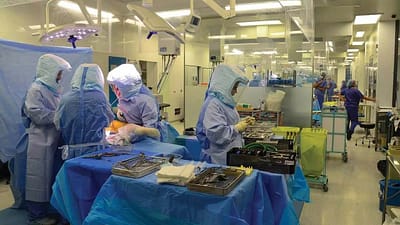
In addition to revolutionising the total hip prosthesis, Charnley also pioneered the clean air environment at Wrightington, transforming joint replacement surgery.
Having perfected the operation in the early 1960s, Charnley was then confronted by a high wound infection rate of about 10% that developed three to six months later.
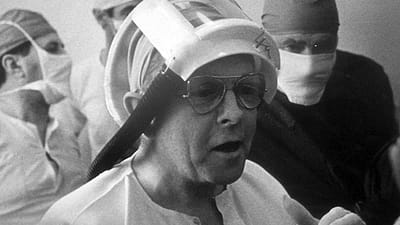
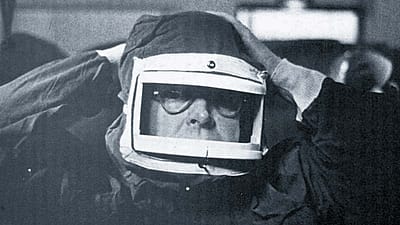
Charnley suspected that the small dust particles in the air of the operating theatre were contaminated with bacteria and settle plate tests confirmed this. He realised that if he was going to reduce the infection rate then he would have to reduce the bacterial count in the air. He did this by drawing in air with a fan which then passed through an electric charge that removed the majority of the contaminated particles. The ‘clean air’ then passed into the small operating theatre called the ‘Greenhouse’.

Initially the greenhouse was a temporary structure that was put up in the morning and taken down at the end of the day. It was about six feet square and claustrophobic, but reduced infection to about 1.5%.

Spurred on by his success, Charnley contacted Hugh Howorth, whose Bolton-based family business built and supplied air-filtration systems for the brewing industry. This system provided air that was 98% free of particles of 2 microns or larger.
Howorth and Charnley continued to refine the system and the permanent vertical laminar air theatre that was created is still in use today.